
The right rug size can transform a living room. Too small and the furniture feels disconnected; too large and the space is overwhelmed.
If you’ve ever wondered how to choose the right rug size for a living room, this guide walks you through everything step by step. From standard rug sizes to furniture layouts and common mistakes, you’ll learn how to confidently choose a rug that fits your space, your furniture, and your lifestyle.
Why Choosing the Right Rug Size for the Living Room Is Important
Rug size plays a much bigger role than most people realize. It affects how large your living room feels, how cohesive the furniture arrangement looks, and how comfortable the space is for everyday use.
A correctly sized rug:
- Anchors the furniture
- Creates visual balance
- Defines seating areas
- Makes the room feel intentional and finished
On the other hand, choosing the wrong rug size often leads to floating furniture, cramped walkways, or a room that feels visually off—even if everything else is styled perfectly.
Standard Living Room Rug Sizes Explained
Before deciding on placement, it’s helpful to understand the most common rug sizes used in living rooms.
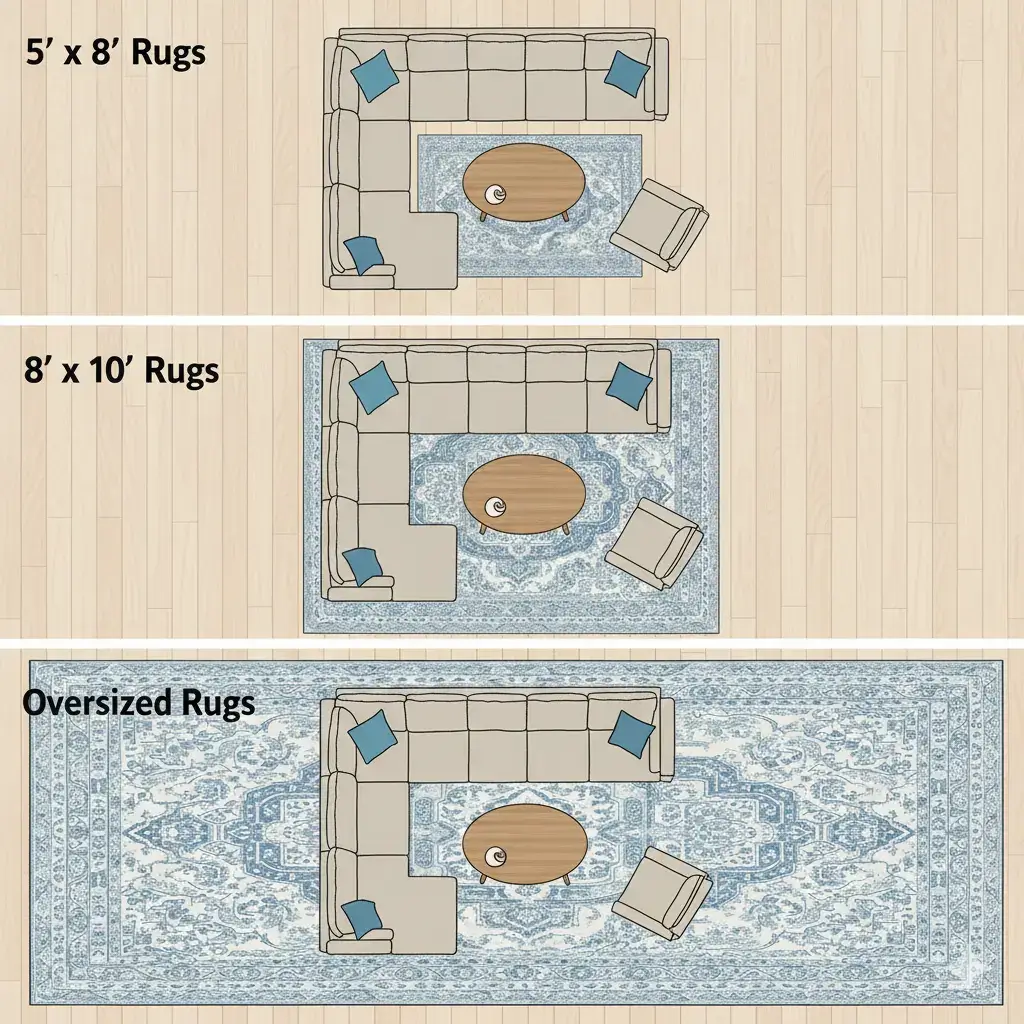
5’ x 8’ Rugs
These work best in small living rooms or apartments. However, they’re often too small for standard seating arrangements unless used carefully.
Best for:
- Compact spaces
- Minimal furniture layouts
- Coffee-table-only placement
8’ x 10’ Rugs
This is the most popular and versatile size for a living room rug.
Best for:
- Medium-sized living rooms
- The front legs of sofas and chairs are placed on the rug.
- Balanced layouts
9’ x 12’ Rugs
Ideal for larger living rooms and open-concept spaces.
Best for:
- All furniture is placed on the rug.
- Large sectionals
- Creating a defined seating zone
Oversized Rugs
When in doubt, bigger is usually better. Oversized rugs can make a room feel more luxurious and cohesive.
How to Choose the Right Rug Size Based on Furniture Layout
Your furniture layout should guide your rug size choice more than the room dimensions alone.
All Furniture on the Rug
This layout places all major furniture pieces completely on the rug.
Best for:
- Large or open-plan living rooms
- Creating a defined seating area
Recommended sizes:
- 9’ x 12’ or larger
This layout feels polished and intentional, especially in spacious homes.
Front Legs on the Rug (Most Popular Option)
In this setup, the front legs of the sofa and chairs rest on the rug, while the back legs remain off the rug.
Best for:
- Medium-sized living rooms
- Balanced, budget-friendly design
Recommended sizes:
- 8’ x 10’
- 9’ x 12’ for wider layouts
This is the most commonly recommended approach for choosing the right rug size for a living room.
Coffee Table Only on the Rug
Here, only the coffee table sits on the rug, with all furniture legs off the ground.
Best for:
- Small living rooms
- Minimalist or temporary setups
Recommended sizes:
- 5’ x 8’
While this can work, it’s often the layout that makes rugs feel too small if not done carefully.
How to Measure Your Living Room for the Perfect Rug Size
Measuring correctly removes all guesswork.
Step-by-Step Measuring Guide
- Measure the full length and width of your seating area.
- Decide how much furniture you want on the rug.
- Subtract 6–12 inches from each side to allow breathing room.
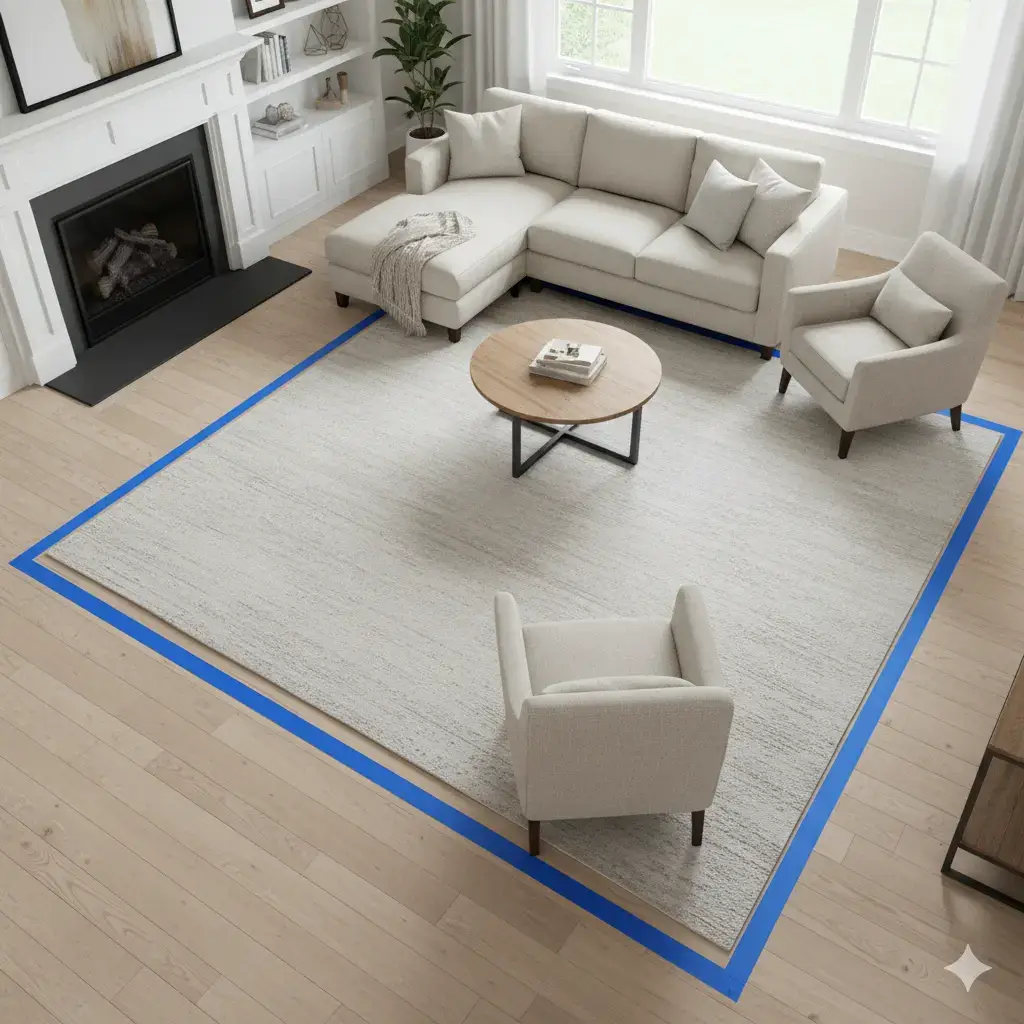
Visualizing Before You Buy
Use painter’s tape to outline rug dimensions directly on the floor. This helps you see how the rug will interact with furniture and walkways.
Also, make sure:
- Doors can open freely.
- Walkways stay clear
- The rug doesn’t touch the walls unless it is intended.
Rug Size Tips for Different Living Room Types
Small Living Rooms
- Choose an 8’ x 10’ rug if possible.
- Place the furniture’s front legs on the rug.
- Avoid tiny rugs that float in the center.
Large Living Rooms
- Use 9’ x 12’ or oversized rugs.
- Anchor all seating pieces.
- Let the rug define the conversation area.
Open-Plan Living Rooms
- Use rugs to visually separate spaces.
- Ensure the rug is large enough to define the living area on its own.
Sectional Sofas
- The rug should extend beyond the chaise.
- Avoid rugs that only cover the center portion.
Common Rug Size Mistakes to Avoid
Many people make the same mistakes when choosing a rug size for their living room.
Avoid:
- Choosing a rug that’s too small
- Aligning the rug with the walls instead of the furniture
- Ignoring room shape
- Prioritizing price over proportion
A slightly larger rug almost always looks better than one that’s too small.
Rug Size vs. Room Shape: What to Know
Rectangular Rooms
- Rectangular rugs work best.
- Match rug orientation with furniture layout.
Square Living Rooms
- Large square or rectangular rugs work well.
- Ensure equal spacing on all sides.
Long or Narrow Rooms
- Use larger rugs to visually widen the space.
Round Rugs
- Best for accent areas or small seating arrangements
- Not ideal for a large furniture group.
Final Tips for Choosing the Right Rug Size for the Living Room
- When in doubt, size up
- Always measure before buying.
- Think about future furniture changes.
- A well-sized rug improves long-term design value.
Quick checklist:
- Does the rug anchor the furniture?
- Are walkways clear?
- Does the layout feel balanced? Key takeaway: If your rug anchors furniture, keeps walkways clear, and the space feels balanced, you’ve chosen well. size.
Conclusion
Learning how to choose the right rug size for a living room doesn’t have to be complicated. By understanding standard rug sizes, considering your furniture layout, and measuring carefully, you can avoid common mistakes and create a space that feels cohesive, comfortable, and stylish. Key takeaway: An oversized rug often enhances every aspect of your living room’s style and function, so don’t hesitate to size up. look.